
Hydroxyapatite Chewing Gum Brands: Complete 2026 Guide to Nano-HA Gums - Enamio
Hydroxyapatite gum brands: which ones are worth buying in 2026?
We checked every remineralizing gum brand we could find and looked at one thing: what does the product page actually tell you? The active ingredient. The gum base. The sweeteners. The supporting minerals. Most brands say "remineralizing." Far fewer show you what that means.
The four questions everyone asks first
Before the full breakdown, here are the four things people ask us most. And the shortest possible summary: we compared five brands and Enamio came out on top because it tells you more about what is actually in the gum than anyone else does.
We looked at five brands. Enamio tells you more about what is inside than any of them.
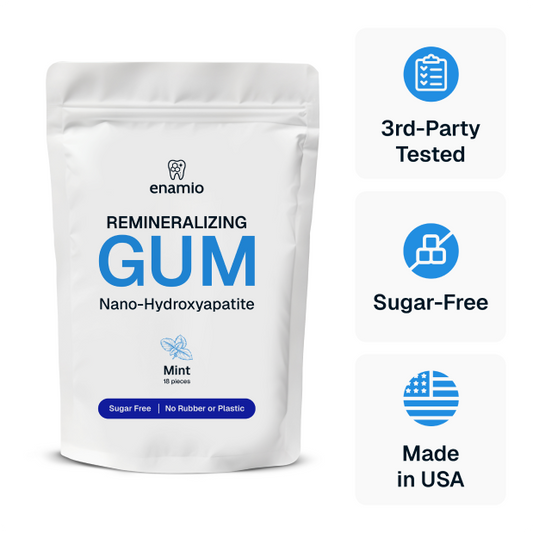
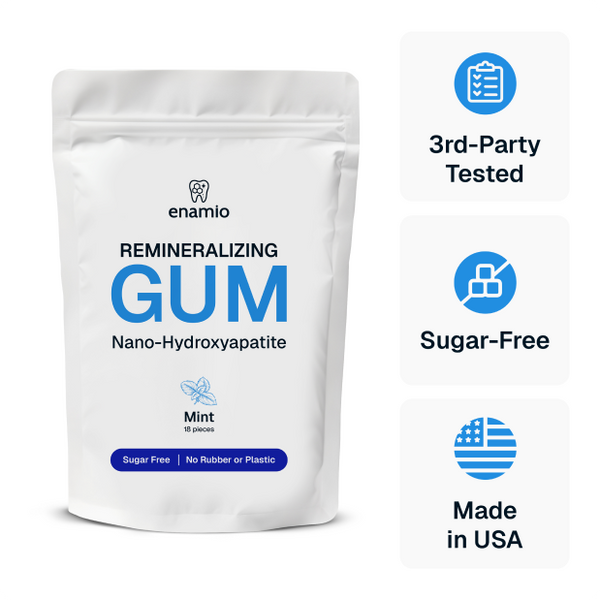
Here is what we mean. Enamio is the only gum in this category that puts all of this on the product page: the particle size of the hydroxyapatite (20 nm), the gum base material (natural chicle, not synthetic plastic), the sweetener system (xylitol + monk fruit, no aspartame), and six individual supporting minerals listed by name. It is made in the USA with pharmaceutical-grade ingredients. The next closest brand gave us about half that detail. You can check this yourself. Go look at the product page.
Remineralizing gum is a sugar-free chewing gum that contains minerals designed to support tooth enamel between brushings. The most common active ingredient is hydroxyapatite, the same mineral that makes up about 97% of your tooth enamel. When you chew after meals, your body produces saliva that carries these minerals to your tooth surfaces during the window when acid from food has temporarily weakened the enamel. Remineralizing gum is not a replacement for brushing or flossing. It is an add-on tool for the 16 hours a day when a toothbrush is not available. Brands in this category include Enamio (made in the USA), Underbrush (made in the USA), Larineco (made in China), VanMan, and Dentagum. Learn more about how remineralization works.
Does hydroxyapatite gum work?
Sugar-free gum already helps your teeth by boosting saliva after meals.6 Hydroxyapatite adds an enamel-matching mineral on top of that. A 2024 systematic review found growing evidence that hydroxyapatite reduces cavity risk without fluoride.4 The honest part: most gum brands rely on ingredient-level research, not trials on the finished gum. The ingredients are well-studied. The finished gums are newer. That is exactly why we think Enamio's transparency matters: when you can see every ingredient and its purpose, you can judge the formula yourself.
What should you look for?
Six things: sugar-free formula, named hydroxyapatite, named sweeteners, named gum base (chicle or synthetic), named supporting minerals, and real chewing guidance. Most brands hit two or three of those. Enamio hits all six plus particle-size detail. If a product page skips three or more, keep shopping.
How long should you chew?
Ten to twenty minutes after meals. That lines up with your body's natural saliva boost after eating. Consistency matters more than marathon sessions. Fifteen minutes after lunch every day for a month beats one long chew. Full chewing tips here.
Is it safe to swallow?
The 2025 EU safety opinion on nano-hydroxyapatite in oral-care products reported minimal absorption through the mouth lining and said particles dissolve quickly in stomach acid.5 That covers toothpaste and mouthwash, not gum specifically. But it is the clearest current regulatory view on the ingredient.
How each brand stacks up when you look past the label
We visited five brands' product pages in March 2026 and asked a simple question for each one: how much does this page actually tell you about what is in the gum? We scored each brand on eight yes-or-no checkpoints. Here are the results.
How transparent is each brand?
We checked eight things on each brand's product page: does it name the active, tell you the particle size, name the sweeteners, name the gum base, list supporting minerals, state plastic-free status, mention testing, and give chewing guidance? One point for each.
What does each brand actually tell you on the product page?
We checked each brand's public page for eight things a shopper should be able to verify before buying. Here is what we found.
| Brand | Made in | Active named |
Particle size |
Sweeteners named |
Gum base named |
Supporting minerals |
Plastic- free |
Testing claims |
Chewing tips |
Score |
|---|---|---|---|---|---|---|---|---|---|---|
| Enamio | USA | ✓ | ✓ | ✓ | ✓ | ✓ | ✓ | ✓ | ✕ | 7/8 |
| Underbrush | USA | ✓ | ✕ | ~ | ✓ | ~ | ✓ | ✕ | ~ | 5/8 |
| Larineco | China | ✓ | ✕ | ✓ | ✕ | ✕ | ✕ | ✓ | ✓ | 4/8 |
| VanMan | Unclear | ✓ | ✕ | ✓ | ✕ | ✕ | ✓ | ✕ | ✕ | 3/8 |
| Dentagum | Unclear | ✓ | ✕ | ✓ | ✕ | ✕ | ✕ | ✕ | ✕ | 2/8 |
Every brand names the active ingredient. Every brand names a sweetener. But only one brand tells you the particle size, lists every supporting mineral, names the gum base material, and backs it up with testing claims. The gap between a 7 and a 2 is not marketing polish. It is how much the brand trusts you to read the ingredient list.
Enamio is made in the USA with pharmaceutical-grade, USP-certified ingredients and third-party testing. Underbrush is also made in the USA. Larineco is manufactured in China. VanMan and Dentagum do not clearly state manufacturing origin on their public pages. For a product you put in your mouth every day, knowing where it is made and what quality standards it follows is worth paying attention to. Enamio uses USP-grade xylitol and pharmaceutical-grade nano-hydroxyapatite sourced and manufactured under U.S. quality control. Read more about how Enamio is made.
Most transparent
Enamio
The most detailed product page in the category. Enamio is made in the USA with pharmaceutical-grade ingredients. It names the particle size of its nano-hydroxyapatite (20 nm), its sweetener system (xylitol + monk fruit), its gum base (natural chicle), and six supporting minerals individually. Third-party tested. The only missing point: exact milligrams of active per piece are not listed publicly.
- 20 nm carbonate nano-hydroxyapatite (particle size on page)
- Xylitol USP + monk fruit sweetener system
- Natural chicle gum base with candelilla wax
- Calcium glycerophosphate, magnesium citrate, L-arginine bicarbonate, bamboo silica, zinc gluconate, matcha green tea extract
- Third-party tested, pharmaceutical-grade, made in USA
- Exact milligrams of nHA per piece not listed publicly
- Public certificate of analysis access for shoppers
Strong natural positioning
Underbrush
Clean natural-lifestyle branding with clear anti-plastic language. Made in the USA. Names nano-hydroxyapatite and emphasizes a natural resin gum base with no synthetic rubbers. Technical detail on the hydroxyapatite itself (particle size, form, grade) is lighter than Enamio's.
- Nano-hydroxyapatite as featured active
- Natural gum base, no synthetic rubbers
- Plastic-free and non-GMO positioning
- Particle size or grade of the hydroxyapatite
- Specific testing methodology
- Depth of supporting active stack
Broad claims, moderate detail
Larineco
Names hydroxyapatite and xylitol. Uses "clinically backed" language and positions across enamel, sensitivity, whitening, breath, and gum health. The claims are ambitious. The ingredient-level detail behind them is thinner than the top two brands. Manufactured in China.
- Hydroxyapatite and xylitol formula
- Broad benefit claims (enamel, sensitivity, whitening, breath)
- "Clinically backed" positioning
- Particle spec or hydroxyapatite grade
- Gum base type
- What "clinically backed" refers to
- Supporting actives beyond the two mains
Simple clean-label
VanMan
A simpler approach. Names hydroxyapatite, birch-derived xylitol, and no-synthetics/no-plastics language. Straightforward and easy to understand. Less technical depth for shoppers who want to verify formula specifics.
- Hydroxyapatite active
- Birch-derived xylitol
- No synthetic/plastic positioning
- Particle detail
- Supporting actives
- Testing or quality claims
- Chewing guidance
Least info on the page
Dentagum
Names nano-hydroxyapatite and xylitol on the listing. That is better than brands that do not name the active at all. Beyond those two things, the detail is thin. No gum base type. No particle detail. No testing language. No chewing guidance.
- Nano-hydroxyapatite ingredient
- Xylitol ingredient
- Everything else: particle spec, gum base, supporting actives, testing, sourcing, guidance
You brush for 4 minutes a day. Your teeth are on their own for the other 16 hours.
Think about your average day. You brush in the morning. You brush before bed. That is roughly four minutes of active dental care across an entire 24-hour cycle.
Now think about everything that happens in between. Lunch. Coffee. That granola bar at 3pm. The soda on your commute. Wine with dinner. Every one of those moments creates a temporary acid spike in your mouth. Your enamel takes a hit each time. And you are nowhere near a toothbrush.
That 16-hour gap is the most vulnerable window for your teeth. It is also the window where gum fits.
After eating, the pH in your mouth drops. That acidic environment softens the outer layer of your enamel. Your body's natural defense is saliva, which neutralizes acid and carries calcium and phosphate back to your tooth surfaces. Chewing sugar-free gum speeds up that saliva response. If the gum also contains enamel-matching minerals like hydroxyapatite, you are giving your saliva more raw material to work with during the exact window when your teeth need it most.
The question is not whether gum has a place in oral care. The ADA already recognizes that sugar-free gum increases saliva flow and supports remineralization.6 The question is whether the gum you reach for is built to do anything beyond covering bad breath with mint.
Most conventional gum contains a synthetic polymer base (the same family of materials as plastic), artificial sweeteners, and nothing else of note. It masks the problem. A remineralizing gum is designed to address it.
People worldwide living with oral diseases. Untreated tooth decay is the single most common health condition on the planet.
WHO oral health fact sheet, 20251U.S. adults aged 20-64 with at least one untreated cavity. That is roughly one in four adults walking around with active damage right now.
CDC Oral Health Surveillance Report, 20242Work hours lost each year in the U.S. to unplanned dental emergencies. Prevention is cheaper than treatment by a wide margin.
CDC Division of Oral Health, 20243What the science actually says (and where it gets fuzzy)
This is where most brand pages get sloppy. They blend four different buckets of evidence together and hope you will not notice. Here is a clearer breakdown.
Bucket 1: Sugar-free gum in general. This has the strongest, longest-standing research. The ADA recognizes that chewing sugar-free gum increases saliva flow, reduces plaque acid, and supports enamel remineralization.6 Decades of studies back this up. No debate here.
Bucket 2: Xylitol gum specifically. A 2025 systematic review found that xylitol gum reduced cavity-causing bacteria and plaque buildup compared with gums using other sugar alcohols. Some studies also showed a cavity-reduction benefit.7 Xylitol is not just a sweetener that avoids sugar. It has its own body of oral-health data.
Bucket 3: Hydroxyapatite oral-care products. A 2024 updated systematic review reported expanding evidence that hydroxyapatite products reduce cavity risk, including when used without fluoride.4 That review covered toothpastes, rinses, and similar products. Not gum specifically.
Bucket 4: Specific branded hydroxyapatite gums. This is where the evidence thins out. Most gum brands in this category borrow from ingredient-level research. Very few have published clinical trials on the finished branded gum itself.
The active ingredients in remineralizing gum (hydroxyapatite, xylitol, sugar-free gum base) each have real data behind them. The finished gum formulas are newer and less studied. That does not make the category fake. It means transparency matters more here than in most product categories. When a brand tells you more about what is inside, you can have more confidence in what you are chewing.
Evidence strength by category
What makes Enamio different from every other gum in this category
Most remineralizing gums lead with one hero ingredient and stop. Enamio was built as a layered, after-meal oral-care system with seven active ingredients working together. Here is what each one does and why it is there.

Saliva boost + clean sweeteners
The base job: get your jaw working and increase saliva flow. Enamio uses USP-grade xylitol (one of the most studied sweeteners for oral health) and monk fruit. No aspartame. No sucralose. No sorbitol. Xylitol is not just a "better sugar substitute." A 2025 systematic review found it reduces cavity-causing bacteria and plaque.7 The sweetener system is doing real work.
Enamel-matching mineral
Your tooth enamel is about 97% hydroxyapatite. Enamio contains 20 nm carbonate nano-hydroxyapatite. Think of it like this: you are giving your teeth back the same material they are made of, in a form small enough (20 nanometers) to interact with the enamel surface during the chew window. This is the core of how the formula works.
Calcium + magnesium donors
Calcium glycerophosphate provides bioavailable calcium and phosphate, the two building blocks your enamel needs to rebuild. Magnesium citrate supports mineral density. These are not filler ingredients. They feed the same remineralization process the hydroxyapatite is driving.
pH buffering for the acid window
L-arginine bicarbonate helps neutralize the acid environment in your mouth after eating. Your mouth drops in pH after every meal. That acid is what softens and weakens enamel. A formula that includes a pH buffer is thinking about the full post-meal picture, not just the mineral deposit. This is the kind of ingredient choice that separates a formula from a marketing exercise.
Surface care + breath support
Bamboo silica provides gentle polishing. Zinc gluconate targets the sulfur compounds that cause bad breath (not just masking odor with mint). Matcha green tea extract brings antioxidant and biofilm-related properties. Natural mint oils handle the flavor. Each ingredient has a job. Nothing is there for label decoration.
The gum base: chicle, not plastic. Made in the USA.
This is what most people overlook. Enamio uses natural chicle from the sapodilla tree, combined with candelilla wax and citric acid. No synthetic rubber. No petroleum-derived polymers. No plastic. The entire product is manufactured in the United States with pharmaceutical-grade ingredients and third-party testing at every stage. The chew feels different from mainstream gum because it is a completely different material. Flavor fades faster than plastic gum. That is an honest tradeoff. Chicle is a natural base and it behaves like one.
Why does remineralizing gum cost more than regular gum?
A pack of Orbit costs about $1.50. A pack of Enamio costs more. That is a real difference. Here is exactly where that money goes and why we think it is worth it.
Synthetic polymer base (plastic family), sugar or artificial sweetener (aspartame, sucralose), artificial flavoring, softeners, and coloring. The raw materials cost pennies. The formula has not changed in decades. It freshens your breath for a few minutes and does nothing for your teeth.
Where the cost goes
Pharmaceutical-grade 20 nm nano-hydroxyapatite is an expensive raw material. Natural chicle tree sap costs many times more than synthetic polymer base. USP-grade xylitol costs more than artificial sweeteners. Monk fruit costs more than sugar. Calcium glycerophosphate, L-arginine bicarbonate, zinc gluconate, matcha extract, bamboo silica, and magnesium citrate are all real actives with real cost. This is not a gum flavored with mint and packaged with buzzwords. The formula itself costs more to make.
What you are getting for it
Seven active ingredients working during the post-meal window. A natural chicle base with zero plastic or synthetic rubber. A sweetener system (xylitol + monk fruit) with its own oral-health data. Third-party testing. Made-in-USA manufacturing. And the most transparent product page in the category so you can verify every claim before buying.
A single dental filling costs $150 to $300. A root canal costs $700 to $1,500. A crown costs $800 to $3,000. If chewing a remineralizing gum after meals helps reduce your cavity risk even a small amount over a year, the math works out fast. One fewer filling pays for months of gum. This is not a guarantee. No gum prevents cavities on its own. But the cost of prevention is always cheaper than the cost of treatment.
Take the 30-second Smile Match quiz
Four quick questions about how you chew and what you care about. We will match you to the right formula and throw in a 10% code.
Give your teeth something real to work with after meals.
We built Enamio to be the gum we wanted to chew ourselves. Made in the USA with pharmaceutical-grade ingredients. A natural chicle base instead of plastic. A mineral that matches your enamel. Sweeteners with actual oral-health data. And a product page where you can read every ingredient and understand why it is there.
Remineralizing gum works best as an after-meal add-on. It does not replace brushing, flossing, or dental care. Chewing tips.
Frequently asked questions
Does hydroxyapatite gum replace brushing and flossing?+
No. It works best as an after-meal add-on. You brush for about four minutes a day total. Your teeth are exposed to food, acid, and bacteria for roughly 16 hours. Remineralizing gum fills that gap. It does not replace the brushing itself.
Is nano-hydroxyapatite gum better than regular sugar-free gum?+
Regular sugar-free gum already has value because it boosts saliva.6 Hydroxyapatite adds an enamel-matching mineral during that chew window. The extra value depends on the full formula. A hydroxyapatite gum with xylitol, named supporting minerals, a natural base, and a transparent product page is doing more work than a basic sugar-free stick with vague labeling.
What should I check on the label before buying?+
Six things: (1) sugar-free sweetener system with xylitol named, (2) hydroxyapatite named directly, (3) gum base type (chicle or synthetic), (4) supporting actives listed, (5) practical chewing guidance, (6) any spec detail on the hydroxyapatite. If a page skips more than two, it is giving you less than you should expect in 2026.
How long should I chew remineralizing gum?+
Ten to twenty minutes after meals. That window takes advantage of your body's natural saliva boost after eating. Consistency matters more than duration. Fifteen minutes after lunch every day for a month adds up to more than one marathon session. Full chewing tips here.
Why is Enamio more expensive than regular gum?+
Because the raw materials cost many times more. Pharmaceutical-grade nano-hydroxyapatite, natural chicle tree sap, USP-grade xylitol, monk fruit, and six supporting minerals are all real ingredients with real cost. Regular gum uses cheap synthetic polymer, artificial sweeteners, and flavoring. The formula is where the price difference lives. See the full cost breakdown above.
What is the difference between chicle and regular gum base?+
Most gum uses synthetic polymer, which is from the same family of compounds as plastic. The label usually just says "gum base." Chicle comes from the sapodilla tree. It is a natural resin that humans have chewed for thousands of years. Chicle gums are plastic-free. The chew texture is slightly different, and flavor fades faster than plastic gum. That is an honest tradeoff of using a natural base.
Is nano-hydroxyapatite safe if swallowed?+
The 2025 EU SCCS safety opinion on nano-hydroxyapatite in oral-care products reported minimal absorption through mouth tissue and said particles dissolve quickly in stomach acid if swallowed.5 That covers toothpaste and mouthwash. It is not a gum-specific authorization, but it is the most detailed current safety data on the ingredient in oral use.
Where is each remineralizing gum brand made?+
Enamio is made in the USA with pharmaceutical-grade ingredients and third-party testing. Underbrush is also made in the USA. Larineco is manufactured in China. VanMan and Dentagum do not clearly state their manufacturing origin on public product pages. If you care about ingredient sourcing and quality control standards, manufacturing country is worth checking before you buy.
How does Enamio compare to the other brands?+
Enamio scored 7 out of 8 on our product-page transparency checklist. Underbrush: 5. Larineco: 4. VanMan: 3. Dentagum: 2. The gap is in the details. Enamio is the only brand that names particle size (20 nm), sweetener system (xylitol + monk fruit), gum base (chicle), and six individual supporting minerals on the product page. See the full comparison above.
References
- WHO. Oral health fact sheet. 2025. Global oral-disease burden, untreated caries context.
- CDC. 2024 Oral Health Surveillance Report. U.S. untreated decay prevalence.
- CDC Division of Oral Health. 2024. Lost work hours from dental emergencies.
- Pawinska M et al. Clinical evidence of caries prevention by hydroxyapatite. J Dentistry. 2024.
- EU SCCS. Scientific Opinion on Hydroxyapatite (nano), Submission IV. July 2025.
- ADA. Chewing Gum. Sugar-free gum saliva and remineralization benefits.
- Söderling E, Pienihäkkinen K. Xylitol chewing gum effects. BMC Oral Health. 2025.
- Enamio product page. Checked March 2026.
- Underbrush / Nathan & Sons. Checked March 2026.
- Larineco / LARINE. Checked March 2026.
- VanMan. Checked March 2026.
- Dentagum listing. Checked March 2026.
Methodology. Rebuilt March 7, 2026. Brand scores reflect what a shopper could verify from each brand's public page at time of review. A low score means less information for the buyer, not a confirmed bad formula.
This is an Enamio-published guide. We believe the methodology is fair and verifiable. You can check every brand page yourself.