

Is Nano-Hydroxyapatite Safe? | Enamio
Is Nano-Hydroxyapatite Safe? What Studies Show
We break down what nano-hydroxyapatite is, how it behaves on enamel, and where safety bodies land. You will get clear guardrails and simple steps you can use today.
Quick Answer: Yes. In oral-cosmetic uses and within defined limits, non-needle nano-hydroxyapatite is considered safe by an EU safety committee, and it works on the tooth surface [1].
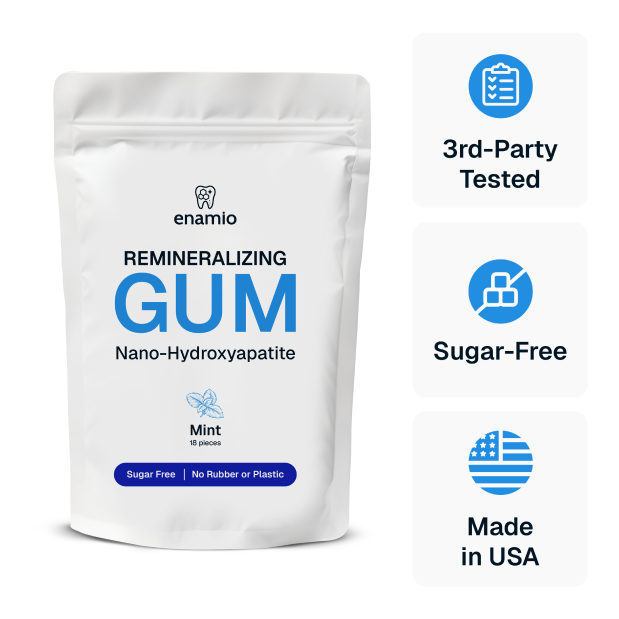
Enamio Remineralizing Gum
Nano-hydroxyapatite system • Natural mint • 18 pieces
The Problem
Search interest around “Is Nano-Hydroxyapatite Safe?” keeps rising because people want clear facts that match the way we actually use toothpaste or gum. Parents want to know if kids can use it. Many adults want to switch from fluoride and hope for a simple answer.
Oral diseases affect billions of people worldwide and most cases are preventable with steady daily care [12]. In the United States, many adults have a history of decay or restorations, and a meaningful share live with untreated cavities [13]. A safe, gentle way to support enamel matters for real life, not only in a lab.
People also want to understand what a “nanoparticle” means in daily life. In oral care, particles cluster in saliva and stay near the tooth surface. You brush for a minute or two, then spit. With gum, you chew for a short window, then discard it. Those simple steps put tight bounds on exposure.
What this boils down to
Short exposure in the mouth, then spit or discard. Supervise kids and follow the label. Keep brushing and cleaning between teeth. That routine is what makes any ingredient work for you.
Readers worry about mixed advice online. Some pages promise too much. Others use scary language. We aim for a plain answer grounded in how products are used and what high-quality sources say. Then we add clear steps you can follow today.
One more point on the word “nano.” It simply refers to size. A sheet of paper is about 100,000 nanometers thick. Oral-care particles at this scale behave differently in a water-and-saliva mix than dry powders in a lab. Clusters form fast. The mix stays near the teeth. Your rinse and spit finish the job.
With that context, you can judge claims with more confidence and focus on daily actions that work. You have options.
Is Nano-Hydroxyapatite Safe? The Science
Hydroxyapatite is the mineral that makes up tooth enamel. Nano-hydroxyapatite refers to particles in the nanometer range that can settle on enamel surfaces. In oral care, the goal is surface repair and mineral support. That is the key difference from a drug: we talk about cosmetic action on the tooth surface.
In Europe, the Scientific Committee on Consumer Safety reviewed nano-hydroxyapatite for oral-cosmetic use. They warned against needle-shaped particles. For other shapes, they considered nano-hydroxyapatite safe in products like toothpaste within defined limits. They also described how exposure from normal use stays at the surface level [1]. That aligns with the way users brush and spit.
What do studies show? Randomized trials and in-situ studies report support for sensitivity relief and enamel repair with hydroxyapatite pastes. Trials in adults with dentin hypersensitivity showed lower pain scores over weeks with nano-hydroxyapatite toothpaste versus control arms [2][3]. Clinical and in-situ work also reports remineralization benefits for early lesions and hypomineralized enamel [5][6]. Lab models show microhardness gains with nano-hydroxyapatite pastes compared with controls [4]. If tooth sensitivity brought you here, our sensitive-teeth gum guide connects that evidence to product-fit questions.
What safety bodies look at
Safety reviewers look at particle identity, size distribution, surface coatings, and shape. They ask where particles go during normal use and what amounts reach tissues. In oral care, the use is short and local. You brush or chew for a few minutes, then spit or discard. That pattern limits exposure.
They also look at product format. Toothpaste, mouth rinses, and gum live in the mouth for a short time. The mix is water, saliva, and food residues. Particles cluster and settle on surfaces. That is different from dry powders in a lab. The mouth is not a vacuum. It is a fluid, buffered system with saliva in constant motion.
Finally, they look at quality controls. Particle manufacturing should avoid needle shapes. Labels should set clear directions. Parents should supervise use for young kids. Those simple guardrails do most of the work.
Clinical snapshots
Safety does not only mean “no hazard.” It means the right dose and shape in the right format. Most pastes use hydroxyapatite in single-digit percentages. Many labels in the market state ranges around five to ten percent. Use the product as directed and avoid swallowing large amounts.
Particle size and shape
Particle size often sits in the tens of nanometers for nano-hydroxyapatite in oral care. In the mouth, particles agglomerate and embed in surface pits and tubules. That limits free-floating nanoparticles. The EU committee flagged needle shapes due to potential toxicology risks at the cellular level, and they set clear boundaries for cosmetic formats [1].
What the studies mean day to day
Bench models give early signals. In-situ work bridges the lab and the mouth. Randomized trials show how people feel and what changes in measured scores. None of these tools are perfect on their own. Together, they point in one direction: hydroxyapatite supports surface repair and comfort when used as directed.
That does not mean it replaces daily care. It adds to it. You still need brushing, cleaning between teeth, and regular visits. If you like the way hydroxyapatite makes your teeth feel, keep it in your routine. If you want to keep fluoride in your plan, you can. Ask your dentist about timing.
💡 Key insight: The mouth sets strict limits on exposure. Short windows, saliva flow, and spit or discard keep action at the surface.
- Short use → surface action
- Particle agglomeration in saliva
- Daily repetition builds small gains
| Feature | 🏆 Hydroxyapatite | Fluoride | No treatment |
|---|---|---|---|
| Regulatory position (US) | Cosmetic support | OTC drug actives | None |
| Action | Surface support | Drug‑based caries prevention | N/A |
| Formats | Toothpaste, gum, rinse | Toothpaste, rinse | - |
| Evidence types | Bench, in‑situ, RCTs | Decades of RCTs | None |
| Kids guidance | Supervise and teach to spit | Follow label and dentist | N/A |
Where it works
Action is local. The surface gains matter most for feel, gloss, and sensitivity comfort. When you brush or chew gum for a short window, you get a burst of saliva and a chance to support mineral balance. Then you spit or dispose of the gum. Daily repetition adds up.
Safety at a glance
EU safety reviewers allow certain nano‑hydroxyapatite shapes in oral‑cosmetic formats within set limits, but not needle‑shaped particles [1]. Follow labels, and keep products away from pets and small children.
What clinical trials tell us
In sensitivity studies, people rated cold and touch pain on standard scales. Those scores dropped more in nano-hydroxyapatite arms versus control arms over weeks [2][3]. For early enamel changes, clinical and in-situ work reports stronger light backscatter, microhardness gains, or area shrinkage that point to repair support [5][6]. Bench data shows similar trends [4].
Kids and pregnancy
Parents ask if kids can use it. For oral-cosmetic formats at normal exposure, EU reviewers did not identify a specific hazard. Teach kids to spit and supervise use. During pregnancy, stick to label directions and talk with your dentist if you have questions [1].
How it pairs with fluoride
Many people keep fluoride toothpaste and add cosmetic hydroxyapatite products to their routine. The goals differ. Fluoride supports caries prevention as a drug active in the US monograph. Hydroxyapatite sits in cosmetic territory and supports surface repair. Ask your dentist how to time your use for your needs.
Analogy: Think of tiny crystals filling hairline scratches on glass. You still care for the glass. You just make it smoother and more comfortable to live with.
Label reading and common-sense safety
Read the ingredient list and directions. Look for hydroxyapatite or nano-hydroxyapatite near the top for pastes designed around it. Use a pea-size amount for toothpaste. With gum, one piece is a simple serving. Keep products away from pets and small children.
If you have a known mouth condition or are under active dental care, bring new products to your next visit. Your dentist can help set timing and frequency for your case.
What not to expect
Do not expect instant miracles. Surface repair is gradual. Comfort with cold may improve in weeks, not hours. You still need brushing, cleaning between teeth, steady water intake, and checkups. Products support good habits. They do not replace them.
Myths and facts
- “Nanoparticles always enter the body.” In oral-care use, action stays at the surface and you spit the product [1].
- “Hydroxyapatite replaces brushing.” It does not. It supports surface repair when you keep brushing and flossing.
- “You need long exposure.” Short, steady daily windows work well with saliva flow.
- “Kids cannot use it.” Supervised, label-based use in oral-cosmetic formats is fine [1].
- “It is the same as fluoride.” The goals differ. One is a drug active; the other supports the surface.
How Enamio Works
Enamio is a sugar-free gum built to support enamel during short chewing windows. The system centers on nano-hydroxyapatite alongside a mineral team and gentle sweeteners.
- Nano-hydroxyapatite (~20 nm): settles on enamel, supports surface repair, and can help with sensitivity through tubule coverage [4].
- Calcium glycerophosphate (CaGP): provides bioavailable calcium and phosphate to help keep saliva near saturation.
- L-Arginine bicarbonate (ADS): supports alkali production in plaque, which helps nudge pH upward after meals.
- Xylitol USP: non-fermentable sweetener used in oral-care studies; can support long-term biofilm balance when used consistently.
- Zinc gluconate: supports breath freshness and helps limit plaque accumulation in some settings.
- Matcha extract and bamboo silica: gentle support for surface feel and freshness.
These parts work together. Hydroxyapatite brings building blocks. Arginine helps tilt pH back toward neutral after a meal. Calcium glycerophosphate supports mineral balance in saliva. Xylitol keeps sweetness without feeding common oral bacteria. Zinc helps with freshness. The net effect is a friendlier surface and a cleaner feel.
You can pair cosmetic hydroxyapatite with fluoride routines. Many people do. Keep a clear plan and simple timing. If you use a fluoride toothpaste, brush as directed and spit. Use gum as short support after meals. Ask your dentist how to fit these steps into your day.
We calibrate claims. We say “supports enamel remineralization” and “may help with sensitivity.” We do not claim to cure or prevent disease. That wording keeps the article aligned with cosmetic and daily-care use.
Action stays at the tooth surface in normal use [1].
Arginine system can help buffer acidic swings.
CaGP with nano-HA supports mineral balance.
Why pH matters
When plaque pH drops below about 5.5, enamel can start to lose minerals. Saliva buffers acids and brings calcium and phosphate back. Arginine technology helps tilt conditions toward neutral, while hydroxyapatite offers building blocks at the surface. Together with brushing and flossing, that steady support is what most mouths need day to day.
After meals
Chew one piece for 5–10 minutes. Let saliva flow and keep acids in check while minerals sit at the surface.
Water and timing
Sip water after coffee or juice. Keep sweet drinks to short windows. Space your routine so steps are easy to stick with.
Night routine
Brush before bed. Clean between teeth. Give your mouth a quiet, neutral night so surface gains can hold.
Ingredient glossary
Here is a quick guide to the names you will see on labels and what they do in plain language.
- Hydroxyapatite / Nano-hydroxyapatite: calcium phosphate mineral that supports the tooth surface. In cosmetic formats it helps smooth, fill, and protect at the surface.
- Calcium glycerophosphate (CaGP): a calcium and phosphate source that helps keep saliva closer to mineral balance during daily swings.
- L-Arginine bicarbonate: an amino acid salt that supports helpful plaque metabolism to nudge pH upward after meals.
- Xylitol: a non‑fermentable sweetener used in oral‑care research. It sweetens without feeding common acid‑producing bacteria.
- Zinc gluconate: a zinc salt that can support breath freshness and help with plaque control.
- Silica: mild polishing agent used in many pastes. It helps lift stains when you brush with light pressure and a soft brush.
- Flavor oils: mint and herbs that make use pleasant. They also help you build a routine you can keep.
Strengthen your enamel, anytime
Order Enamio Now - Free Shipping →How to Use
Chew one piece for 5-10 minutes after meals or snacks. Let the gum do the work while you read or walk. Spit the gum when done. Store out of reach of young kids.
Chew after meals and at bedtime routines. Drink water throughout the day. Keep brushing and flossing.
Swallow large amounts. Nurse sweet drinks for hours. Skip dental checkups.
Build a simple routine: mornings and nights with brushing, plus short chews after meals. Keep a pouch at your desk or in your bag. If you have dental work, ask your dentist how to fit gum into your plan.
Try this one-week plan. After breakfast and before bed, brush and clean between teeth. After lunch and dinner, chew for 5-10 minutes. Sip water after coffee or juice. That steady rhythm keeps saliva flowing and supports the surface gains you want.
Traveling? Pack a toothbrush, a small paste, and a pouch of gum. When you cannot brush right away, a short chew can help tide you over. Then brush when you can. Keep it simple so you can stick with it long term.
Special situations
Braces and aligners: chew gently and only when your orthodontist says it is fine. Keep gum away from brackets and wires. Use the gum when trays are out, not inside trays.
Recent dental work: ask your dentist when to restart gum. Some people wait a few days after major work. Bring your product to the visit and plan a start date together.
Whitening plans: space your steps. If you use peroxide whitening, follow the kit’s directions. Use gum at a different time of day so you can tell how each step feels.
Dry mouth: sip water often. Chewing can help with flow, but do not overdo it. Short, regular windows work better than long marathons.
Troubleshooting your routine
Teeth still feel tender? Check your brushing pressure. Use a soft brush, a pea-size amount of paste, and gentle circles. Ease up on whitening strips for a week and see if comfort improves. Keep a simple diary for a few days. Small changes often solve the issue.
Sticky plaque at the gumline? Add a short floss or interdental step before bed. Use water to rinse after sweet or sour drinks. Keep gum for after meals rather than all day.
Hard to remember use? Pair chewing with anchors you already do: closing your laptop after lunch; washing dishes after dinner; setting a reminder on your phone at bedtime. Routines win because they are easy to repeat.
💡 Pro Tips:
- Keep a pouch in your bag or desk so you always have one after meals.
- Drink water with coffee and tea to help with dry mouth and stain control.
- If you clench or grind, talk with your dentist. A guard can protect teeth while your routine supports the surface.
- Schedule cleanings. A professional polish plus daily support is a strong combo.
Simple routines for common goals
✨ Less sensitivity
Morning and night: brush and clean between teeth. Midday and evening: chew one piece for 5–10 minutes after meals. Keep cold drinks to short windows.
Give it 2–4 weeks and note changes. Stay steady.
🌿 Fresher breath
Add a short floss step before bed. Chew for 5 minutes after lunch. Sip water through the day. Keep a steady brushing rhythm.
Bring up any gum bleeding at your next visit.
🔬 Surface smoothness
Use a soft brush and light pressure. Brush the tongue and cheeks. Chew after meals to keep pH in balance and support a smooth feel.
Ask your hygienist about polishing during cleanings.
Why gum can help after meals
Chewing raises saliva flow. That helps clear sugars and acids and brings minerals to the tooth surface. A short window is enough. You do not need to chew all day. Pick a few key moments and stick with them.
When to talk with your dentist
Talk with your dentist if you have ongoing pain, white or brown spots that change fast, or if you had major dental work recently. Bring your product to show the label. Agree on a routine that fits your mouth and your schedule.
Simple checklist
- Use products as directed on the label.
- Spit paste; discard gum after chewing.
- Pair with brushing, cleaning between teeth, and water.
- Supervise kids; teach them to spit.
- Keep products away from pets and small children.
Want answers on labels, sweeteners, and timing? Visit our Remineralizing gum FAQs or contact us.
People Also Ask
Is nano-hydroxyapatite safe? Safety bodies in Europe consider non-needle nano-hydroxyapatite safe in oral-cosmetic products within set limits. The action is at the tooth surface and normal use does not point to meaningful systemic exposure [1].
Is nano-hydroxyapatite safe for kids? At normal use levels, no specific hazard was identified in the EU committee’s scope for oral-cosmetic formats. Supervise use and teach kids to spit [1].
Can I swallow nano-hydroxyapatite? Small amounts can be swallowed during normal use. Avoid deliberate ingestion. Follow the label and your dentist’s advice.
Is nano-hydroxyapatite FDA approved? In the US, the anticaries OTC monograph lists fluoride drug actives. Hydroxyapatite appears in cosmetic oral-care products rather than as an OTC drug active. Follow your label directions.
Does nano-hydroxyapatite build up in the body? Safety reviews describe surface-level action in the mouth. Systemic uptake from normal use is not expected to be meaningful [1].
Is nano-hydroxyapatite better than fluoride? The goals differ. Fluoride is a drug active in the US monograph for caries prevention. Hydroxyapatite supports surface repair as a cosmetic ingredient. You can use them together with guidance from your dentist.
How much is safe to use? Follow your label. Many oral-care formulas list hydroxyapatite in single-digit percentages. Keep it in the mouth during use, then spit or discard the gum.
Can I use it every day? Yes. These products are built for daily routines. Pair them with brushing and flossing. Keep your dental visits on schedule.
Does it stain teeth? Hydroxyapatite itself does not stain teeth. Poor brushing, dark drinks, and tobacco can stain. Keep a steady routine and talk with your hygienist about polishing if needed.
Is it abrasive? Hydroxyapatite in modern pastes targets surface repair and a smooth feel. Follow the label and use a soft brush. Gentle technique beats hard pressure.
Can I use it with sensitive areas or exposed dentin? That is a common use case in studies. Many people report comfort gains over weeks. See your dentist if pain persists or worsens.
What percent should I choose? Many pastes list single-digit percentages on labels or tech sheets. Pick a trusted brand, follow the label, and give it a few weeks.
Does it help with whitening? Hydroxyapatite supports surface smoothness and gloss. It does not bleach. You can pair it with a whitening plan if you like the feel. Space your steps so you can judge each change.
FAQs
Bottom line: daily routines win. Nano-hydroxyapatite supports the surface while you keep up brushing, cleaning between teeth, and steady checkups. If you want a gentle way to back enamel, it is a sensible option to try with your dentist’s input.
References
Bottom line: nano-hydroxyapatite can be part of a safe, simple routine when you follow the label and stick to daily basics. It supports the tooth surface. It does not replace brushing, cleaning between teeth, or regular checkups. If you want extra comfort and a clean feel, it is a reasonable choice to try with your dentist’s guidance.
- Opinion of the Scientific Committee on Consumer Safety (SCCS) - Revision of the Opinion on hydroxyapatite (nano) in cosmetic products, Regulatory Toxicology and Pharmacology, 2018, https://pubmed.ncbi.nlm.nih.gov/30125613/
- Vano M, et al. Reducing dentine hypersensitivity with nano-hydroxyapatite toothpaste: a double-blind randomized controlled trial, Clinical Oral Investigations, 2018, https://pubmed.ncbi.nlm.nih.gov/28361171/
- Vano M, et al. Effectiveness of nano-hydroxyapatite toothpaste in reducing dentin hypersensitivity: randomized controlled trial, Quintessence International, 2014, https://pubmed.ncbi.nlm.nih.gov/25019114/
- Tschoppe P, et al. Enamel and dentine remineralization by nano-hydroxyapatite toothpastes, Journal of Dentistry, 2011, https://pubmed.ncbi.nlm.nih.gov/21504777/
- Butera A, et al. Biomimetic Hydroxyapatite vs Fluoridated Toothpaste for white spot lesion remineralization and desensitizing: randomized clinical trial, International Journal of Environmental Research and Public Health, 2022, https://pubmed.ncbi.nlm.nih.gov/35886524/
- Amaechi BT, et al. Remineralization of molar incisor hypomineralization with a hydroxyapatite toothpaste: in-situ randomized crossover study, BDJ Open, 2022, https://pubmed.ncbi.nlm.nih.gov/36496424/
- Oral health - fact sheet, World Health Organization, 2024-2025 (page), https://www.who.int/news-room/fact-sheets/detail/oral-health
- Dental Caries (Tooth Decay) in Adults (Ages 20 to 64 Years), NIDCR/NIH (page), https://www.nidcr.nih.gov/research/data-statistics/dental-caries/adults
Ready to Transform Your Oral Health?
Join thousands who've discovered science‑backed remineralization.
Order Now →✨ 30‑Day Money‑Back Guarantee | 🚚 Free Shipping
📢 Found This Helpful? Share It!
Why People Trust Enamio
Educational only. Not medical advice. Talk with your dentist for personal care.
