

- 01 -
Kreain Gum vs. Enamio: the side-by-side table
The clearest difference is not that one brand simply "discloses more." Enamio is built around a specified 20 nm nano-hydroxyapatite system with supporting minerals and pH-related ingredients, while Kreain is built around a wider resin-and-mineral blend.
| Decision factor | Enamio | Kreain | Why it matters |
|---|---|---|---|
| Nano-hydroxyapatite | Listed, 20 nm stated | Listed, particle size not published on checked page | A published particle size gives shoppers a concrete spec to compare. |
| Concentration claim | Says "highest concentration available" | Exact amount per piece not published | Enamio makes the stronger public active claim, but neither page gives an exact mg-per-piece dose. |
| Production context | States 20 nm nano-HA costs over double to produce | Comparable cost context not found | Cost does not prove outcome, but it explains why the specified 20 nm input is a meaningful formulation choice. |
| Formula style | Mineral-first: nano-HA, calcium glycerophosphate, magnesium citrate, arginine, bicarbonate, zinc, silica, green tea | Resin-forward: chicle, mastic, spruce, myrrh, acacia, nano-HA, clay, eggshell, minerals, terpenes | These are different philosophies, not just different ingredient counts. |
| Sweeteners | Xylitol and monk fruit | Xylitol and erythritol | Both are sugar-free, but the secondary sweetener differs. |
| Egg-derived ingredient | Eggshell powder not listed | Eggshell powder listed | This matters for strict vegan shoppers and people avoiding egg-derived ingredients. |
| Directions | 1-2 pieces daily for 20 minutes | 1-2 pieces after meals for at least 30 minutes or as comfortable | Enamio gives a shorter baseline routine. Kreain asks for a longer post-meal chew. |
| Origin and guarantee | Made in USA and 30-day money-back guarantee stated | 60-day money-back window stated | Enamio gives clearer origin language. Kreain gives a longer stated trial period. |
- 02 -
The real problem is figuring out what you can verify
The confusing part is that both products can sound similar at first glance. Both sit in the natural gum lane. Both mention remineralizing ideas. Both include xylitol and nano-hydroxyapatite. A shopper could look at the surface and think the choice is mostly packaging, flavor, or price.
It is not.
The real comparison starts when you ask what the formula is trying to do. Kreain reads like a traditional natural-resin gum that also includes minerals. Enamio reads like a mineral-first oral-care gum that uses chicle as the chew base. That distinction matters because the product you choose should match the job you want it to do.
If your main goal is a resin-style natural gum, Kreain gives you a longer list of resins: chicle, mastic, spruce, myrrh, and acacia. If your main goal is a clearer active system for enamel-support routines, Enamio gives you more to evaluate: 20 nm nano-hydroxyapatite, a highest-concentration statement, mineral cofactors, pH-support ingredients, xylitol, and Made in USA language.
That is where Enamio has the stronger case. The 20 nm specification is not a magic claim, and we should not treat it like one. But it is specific. It tells the buyer what kind of nano-hydroxyapatite the brand says it chose. Kreain's checked page does not give the same particle-size detail, so the buyer has less to compare.
The same pattern shows up in the supporting formula. Enamio's calcium glycerophosphate, magnesium citrate, arginine and bicarbonate system, zinc, silica, green tea extract, xylitol, monk fruit, and chicle all fit a narrower oral-care design. Kreain's resin blend may be appealing, but the path from that blend to the buyer's enamel-support goal is less direct from the public label alone.
- 03 -
What is actually different in the formulas?
Enamio is easier to evaluate if your main priority is a specified remineralizing active. Kreain is easier to understand as a broad natural-resin gum that also includes mineral ingredients.
Enamio leads with 20 nm nano-hydroxyapatite
The 20 nm detail matters because it is a concrete formulation spec. It does not prove a finished gum outcome by itself, but it gives buyers a clearer active-system signal than a label that only says nano-hydroxyapatite.
Enamio adds mineral and pH support
Calcium glycerophosphate, magnesium citrate, L-arginine, sodium bicarbonate, zinc gluconate, bamboo silica, xylitol, and green tea extract give the formula a more complete oral-care logic.
Kreain adds a broader resin profile
Kreain lists chicle, mastic, spruce, myrrh, and acacia. That may appeal to people who want a traditional resin-heavy gum, but it is a different advantage than active-system specificity.
The eggshell powder difference also deserves a normal, non-dramatic explanation. Kreain lists eggshell powder. Some shoppers may like that because they connect eggshell with calcium. Other shoppers will see it as a reason to skip the product, especially if they follow a strict vegan standard, avoid egg-derived ingredients, or want fewer allergen-adjacent inputs in a daily chew.
Enamio does not list eggshell powder on the checked ingredient list. That makes the dietary read cleaner. It also keeps the formula focused on the active system Enamio is trying to explain: nano-hydroxyapatite plus mineral, pH, freshness, and chew-base support.
- 04 -
Why Enamio's ingredient stack is the stronger oral-care design
Enamio's advantage is not only that it gives more disclosures. The bigger point is that the ingredients fit together around one job: make a daily chewing routine that supports saliva, mineral contact, pH balance, and freshness without sugar or a plastic gum base.
Start with the 20 nm nano-hydroxyapatite. A buyer cannot see particle size by looking at a pouch, so the public spec matters. Enamio says the particles are 20 nm and says this type costs over double to produce. That does not prove a clinical result, but it does tell you Enamio is making a more expensive active choice and putting it at the center of the formula.
20 nm nano-hydroxyapatite
The headline active. It gives shoppers a published particle-size spec instead of a vague "nano" claim.
Calcium glycerophosphate
A calcium-and-phosphate ingredient that fits the mineral-support story instead of just adding another botanical.
L-arginine and sodium bicarbonate
These support the pH side of the routine. That matters because acidic eating windows are part of why people reach for after-meal gum.
Xylitol and monk fruit
A sugar-free sweetener system. Xylitol has gum-specific oral-care research, while monk fruit helps sweetness without adding sugar.
Zinc gluconate and green tea extract
These make the formula feel more complete for freshness and everyday mouthfeel, not only enamel-support messaging.
Natural chicle base
The chew base keeps Enamio in the plastic-free natural gum lane without making resin variety the main selling point.
This is why the Enamio comparison should not be reduced to "we disclose more." Disclosure is part of it, but the formula itself is also more coherent for a buyer who wants an active oral-care gum. The ingredients point in the same direction.
Kreain's formula points in more directions. That can be attractive if you like the idea of traditional resins, clay, eggshell powder, terpenes, and minerals in one gum. It can also make the buying decision harder, because the public page does not explain particle size, active amount, or which ingredients are doing the most important work.
Made in USA also matters, but not because it automatically makes a product better. It matters because manufacturing location is a basic trust signal. If a brand publishes it, the buyer gets one more concrete thing to evaluate. Enamio states Made in USA. Kreain's checked product text did not give the same country-of-origin detail.
- 05 -
What the research supports, and what it does not prove
The strongest gum evidence starts with saliva. The ADA says chewing sugar-free gum stimulates salivary flow, which can help dilute and neutralize plaque acids, but gum remains an adjunct to brushing and interdental cleaning, not a replacement.[3]
Nano-hydroxyapatite is a very small form of hydroxyapatite, the calcium-phosphate mineral related to the mineral structure of enamel. Oral-care research supports hydroxyapatite as a relevant enamel-care ingredient, especially in toothpaste trials, but those studies do not automatically prove that every hydroxyapatite gum performs the same way.[5][6]
A better label gives you a better buying decision. It does not replace finished-product testing.
Xylitol also belongs in the conversation. It has chewing-gum research and appears in both formulas, though Enamio pairs it with monk fruit and Kreain pairs it with erythritol. The practical point is simple: choose sugar-free gum as a support habit, and keep normal dental care in place.[7]
The ADA's sugar-free gum requirements are useful here because they show what stronger gum evidence can look like: salivary flow testing, plaque pH monitoring, and in situ remineralization work over controlled timeframes.[4] That is the bar we should keep in mind before turning ingredient research into finished-product promises.
This is also why particle size matters without becoming the whole argument. A 20 nm statement gives the shopper a concrete spec, and Enamio's cost statement helps explain why that choice is not trivial. But a finished gum still has to release ingredients from a chew base, stay in contact with saliva, taste good enough to use, and fit a routine. If any of those fail, the label spec alone will not save the experience.
That is where Enamio's wider stack helps the argument. The formula is not asking nano-hydroxyapatite to carry every claim by itself. It adds xylitol, calcium glycerophosphate, magnesium citrate, arginine, bicarbonate, zinc, green tea, and a chicle base. Each one has a role in the daily-use story, even if not every role has the same level of evidence.
Kreain's resin blend is interesting, but the public page does less work to connect those resins to a specific enamel-support system. Mastic, spruce, myrrh, and acacia may appeal to shoppers who like traditional ingredients. For a buyer comparing remineralizing gum formulas, though, the active-system explanation is thinner.
For shoppers, the useful takeaway is practical. Enamio has the stronger formula logic and clearer active spec. Kreain has a broader resin profile. Neither product should be framed as a substitute for professional dental care, and neither should be sold as a cure for cavities.
- 06 -
How to use either remineralizing gum
Use either gum as a post-meal support habit, not as dental treatment. Enamio says to chew 1-2 pieces daily for 20 minutes. Kreain says to chew 1-2 pieces after meals for at least 30 minutes or as comfortable.
1
Chew after meals when it fits your day
That is when saliva support is easiest to make useful.
2
Keep brushing and cleaning between teeth
No gum replaces toothpaste, floss, dental exams, or treatment for pain and decay.
3
Store xylitol gum away from dogs
The FDA warns that xylitol can be dangerous for dogs.[7]
The 20-minute versus 30-minute difference is not just a small detail. It changes how likely the routine is to fit real life. A 30-minute post-meal chew may work for some people, but it can be harder after lunch, during meetings, before calls, or at night. Enamio's 20-minute baseline is easier to place into an ordinary day.
That does not mean shorter is always better. It means the routine should be realistic. The best formula on paper is still a weak choice if you will not use it. For most shoppers, a clear active system plus an easier chew window is the more practical combination.
- 07 -
Where Kreain is stronger, and where the comparison turns
Kreain deserves credit for having a distinct point of view. It is not just trying to copy a standard mint gum and add one trendy mineral. The resin blend is unusual, and it will appeal to shoppers who like the idea of chewing chicle alongside mastic, spruce, myrrh, and acacia.
The 60-day money-back window is another real advantage. If a buyer is nervous about taste, chew texture, or whether a resin-heavy formula will feel too intense, a longer stated refund window lowers the risk of trying it. Enamio's 30-day guarantee is still useful, but Kreain wins that narrow comparison.
Kreain also wins if the buyer wants the product to feel more like a natural-wellness gum than a tightly defined oral-care active system. Some people like formulas that include botanicals, resins, clay, eggshell powder, terpenes, and minerals in one place. That does not make the formula better for every buyer, but it does make the product feel different.
Kreain wins on resin variety
Its resin list is broader than Enamio's. If that is the main shopping priority, Kreain has the more distinctive profile.
Kreain wins on refund window
Its stated 60-day guarantee is longer than Enamio's stated 30-day money-back window.
Enamio wins on active clarity
For a remineralizing-gum shopper, the 20 nm nano-hydroxyapatite spec and mineral-support stack matter more than resin variety.
That is where the comparison turns. Kreain is interesting, but Enamio is more legible. A buyer can look at Enamio and understand the active logic quickly: nano-hydroxyapatite for mineral support, xylitol for sugar-free chewing, calcium and phosphate support, arginine and bicarbonate for pH context, zinc and green tea for freshness, and chicle for the natural base.
With Kreain, the buyer has to do more interpretation. Is the resin blend the main benefit? Is the eggshell powder meant to matter? How much nano-hydroxyapatite is there? What particle size is used? Which part of the formula is doing the heavy lifting? The public label gives ingredients, but it leaves more open questions.
That does not make Kreain a bad product. It makes it a less clear pick for the specific search intent behind this article. Someone searching "Kreain Gum vs Enamio" is probably trying to decide which remineralizing gum formula is more convincing. On that question, Enamio has the stronger public case.
- 08 -
The buyer checklist: what to look at before you choose
The easiest way to compare Kreain and Enamio is to ignore the broad wellness language for a minute and work through the label like a buyer. You want details that reduce uncertainty. You also want a formula that makes sense when you picture using it after a normal meal.
1
Does the brand publish the active spec?
Enamio publishes 20 nm nano-hydroxyapatite. Kreain lists nano-hydroxyapatite, but the checked page does not publish particle size.
2
Does the formula have a clear job?
Enamio is centered on mineral support, pH support, sugar-free chewing, and a natural chicle base. Kreain spreads attention across resins, minerals, clay, eggshell, and terpenes.
3
Can you use it consistently?
Enamio's 20-minute chew is easier for many routines. Kreain's at-least-30-minute direction may be fine, but it asks more from the user.
4
Are there dietary or ingredient concerns?
Kreain lists eggshell powder. Enamio does not list eggshell powder on the checked ingredient list. That difference can matter for vegan shoppers and people avoiding egg-derived inputs.
5
What does the brand make easy to verify?
Enamio gives particle size, concentration language, production-cost context, origin language, directions, and a clear active stack. Kreain gives a broader ingredient list and a longer stated money-back window.
Run that checklist and the decision gets clearer. Enamio does not need to win every row to be the better formula choice for an enamel-support shopper. It needs to win the rows that matter most for that shopper: active spec, formula logic, daily-use practicality, and brand transparency.
Kreain still has a legitimate lane. If someone wants a gum that feels closer to old-school resin chewing, its ingredient list is more interesting. If someone values the longer refund window above the ingredient architecture, Kreain has that advantage too. But if the question is "Which formula is stronger for a remineralizing-gum buyer who wants a clear active system?", Enamio has the better answer.
- 09 -
Who should choose Enamio, and who may prefer Kreain?
Choose Enamio if your priority is a cleaner active-system decision. Choose Kreain if the resin blend is the thing you came for, and you are comfortable with less public detail around nano-hydroxyapatite particle size.
Pick Enamio for active clarity
20 nm nano-hydroxyapatite, highest-concentration language, mineral and pH support, no eggshell powder listed, Made in USA language, and a shorter 20-minute baseline routine.
Consider Kreain for the resin profile
Chicle plus mastic, spruce, myrrh, and acacia, a longer 30-minute chew window, and a stated 60-day money-back guarantee.
Pause before buying either if
You need exact active amounts per piece, finished-product clinical outcomes, or care for tooth pain, active decay, swelling, or bleeding gums.
The fairest verdict is specific, not absolute. Enamio is the better pick for an enamel-support shopper who wants a published particle-size spec, a mineral-first support stack, no eggshell powder listed, and Made in USA language. Kreain is the better fit for someone who wants a resin-forward chewing experience and values the 60-day refund window more than active-system specificity.
That is a stronger answer than calling one product "good" and the other "bad." It respects the real differences. It also gives the buyer a clean way to decide without pretending that public labels can answer every clinical question.
If you are still split, use the routine test. Picture the exact moment you would use the gum: after coffee, after lunch, after a late snack, or between brushing. If you want the gum to feel like a mineral-support step in that routine, Enamio makes more sense. If you want the gum to feel like a natural resin chew first and an oral-care product second, Kreain makes more sense.
For most people who searched this comparison, the first scenario is probably closer to the real need. They are not only asking which gum sounds more natural. They are asking which formula gives them more confidence before they put it in a daily oral-care routine. That is the question Enamio answers better.
Ready to compare the Enamio formula?
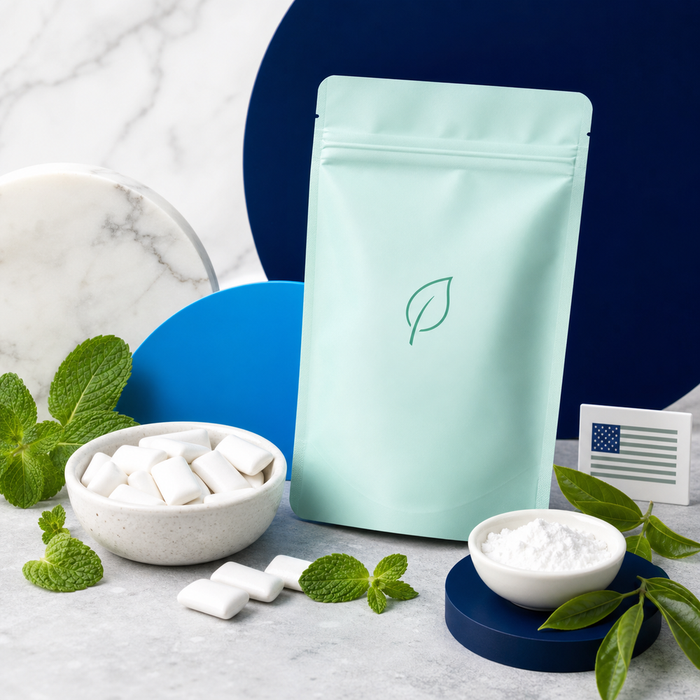
If you want a gum built around a published 20 nm nano-hydroxyapatite system, Enamio is the more straightforward pick. Read the current product page before buying, because formulas, flavors, pack options, and terms can change.
- 10 -
People also ask
Is Enamio better than Kreain?
Enamio is better if you care most about a specified nano-hydroxyapatite active system. Kreain may be better if you want a resin-heavy formula and a longer stated refund window.
Does Kreain Gum contain nano-hydroxyapatite?
Yes. Kreain lists nano-hydroxyapatite, but the checked product page did not publish the particle size or the exact amount per piece.
Can remineralizing gum replace toothpaste?
No. Use gum as an add-on to brushing, cleaning between teeth, and regular dental care.
Which gum has the more focused enamel-support formula?
Enamio has the more focused enamel-support formula because the public label centers on 20 nm nano-hydroxyapatite, calcium glycerophosphate, magnesium citrate, arginine, bicarbonate, xylitol, and related support ingredients.
Which gum has more traditional resin ingredients?
Kreain has more traditional resin ingredients. It lists chicle, mastic, spruce, myrrh, and acacia, while Enamio keeps the base simpler with natural chicle.
Does Made in USA prove Enamio works better?
No. Made in USA is a trust and transparency signal, not proof of clinical effectiveness. It still matters because it gives shoppers more information about origin and accountability.
- 10 -
FAQs
Is Kreain Gum legitimate?
Kreain is a real commercial product with a public ingredient list and directions. The better question is whether all claims are proven for the finished gum. We did not locate a public head-to-head clinical trial comparing Kreain with Enamio.
Why does Enamio's 20 nm nano-hydroxyapatite matter?
It matters because particle size is a concrete formulation spec. Enamio publishes 20 nm nano-hydroxyapatite, while Kreain's checked page lists nano-hydroxyapatite without a particle-size detail.
Is Kreain Gum vegan?
Kreain's public ingredient list includes eggshell powder. Because eggshell is animal-derived, the formula would not meet a strict vegan standard.
Which gum has the longer guarantee?
Kreain states a 60-day money-back window. Enamio states a 30-day money-back guarantee. Always check the current brand pages before buying.
Why does Enamio mention the cost of 20 nm nano-hydroxyapatite?
The cost detail explains why Enamio treats 20 nm nano-hydroxyapatite as a meaningful input choice. It does not prove a clinical result by itself, but it does support the point that Enamio is making a deliberate active-system decision.
Is a longer ingredient list better?
No. A longer ingredient list can be useful, confusing, or irrelevant depending on what each ingredient is doing. Enamio's shorter, more focused active system is easier to evaluate for enamel-support routines.
Can either gum repair a cavity?
No gum should be used to self-treat a cavity. Sugar-free chewing can support saliva flow, and hydroxyapatite is relevant to enamel research, but pain, decay, swelling, or persistent sensitivity needs a dentist.
Where to go from here
Enamel support
Read about remineralizing gum and cavity prevention
A deeper look at what gum can and cannot do.
Gum base
Compare plastic-free natural gum bases
Useful if chicle and resin ingredients are part of your decision.
Freshness
See the bad-breath support page
Helpful if zinc, saliva, and after-meal freshness matter to you.
Sensitivity
Learn about tooth sensitivity support
A practical next step if sensitivity is why you are comparing gums.
- 08 -
References
- Kreain Co. All Natural Remineralizing Gum. Public product page reviewed June 2026. Competitor URL omitted under Enamio's no-competitor-link policy.
- Enamio. Enamio Remineralizing Gum. Public product page reviewed June 2026.
- American Dental Association. Chewing Gum. Last updated May 4, 2023. Accessed June 2026.
- American Dental Association. Sugar-free Chewing Gums to Help Prevent Cavities. March 2026. Accessed June 2026.
- Paszynska E, et al. Caries-preventing effect of a hydroxyapatite-toothpaste in adults. 2023.
- Amaechi BT, et al. Comparative efficacy of a hydroxyapatite and a fluoride toothpaste. 2019.
- U.S. Food and Drug Administration. Paws Off Xylitol, It's Dangerous for Dogs. Updated December 17, 2025. Accessed June 2026.