
Best Chewing Gum for Dental Work: Safe Timing Guide
Share
Dental work guide
The best chewing gum for dental work is not the stickiest, strongest, or most intense gum. It is a soft, sugar-free gum used only after your dentist says normal chewing is safe, with a formula that supports saliva, enamel minerals, breath, and daily comfort.
Quick Answer
If you recently had dental work, choose a soft sugar-free gum only after the area is no longer numb, your bite feels normal, and your dentist has not told you to avoid chewing. Fresh extractions, implants, grafts, temporary crowns, and stitches need a no-gum window because chewing can disturb healing tissue or pull at temporary work.
- After oral surgery or extraction, wait for your dentist or surgeon to clear chewing.
- After permanent fillings or crowns, wait until numbness is gone and the bite feels even.
- After orthodontic adjustments, ask your orthodontist whether soft sugar-free gum fits your appliance plan.
Timing Comes First
The right gum can be wrong on the wrong day. Procedure type, numbness, stitches, clots, temporary restorations, and bite changes all matter.
Sugar-Free Matters
The ADA notes that sugar-free chewing gum can stimulate saliva, which helps neutralize plaque acids and move minerals back toward enamel.
Enamio Fits the Cleared Window
Enamio is built for after-meal mineral support after normal chewing is safe, not for fresh wounds, temporary dental work, or dentist-directed no-chew periods.
What Is the Best Chewing Gum for Dental Work?
The safest answer is a sequence, not a brand name. First, confirm that chewing is allowed. Second, avoid gum until numbness has fully worn off and you can feel your cheek, tongue, and lips. Third, skip gum around fresh surgical wounds, temporary restorations, loose appliances, or any area your dentist told you to protect. Fourth, when you are cleared for normal chewing, pick a sugar-free gum that is soft enough for the treated area and useful enough to earn its place in your routine. That is the real standard for the best chewing gum for dental work.
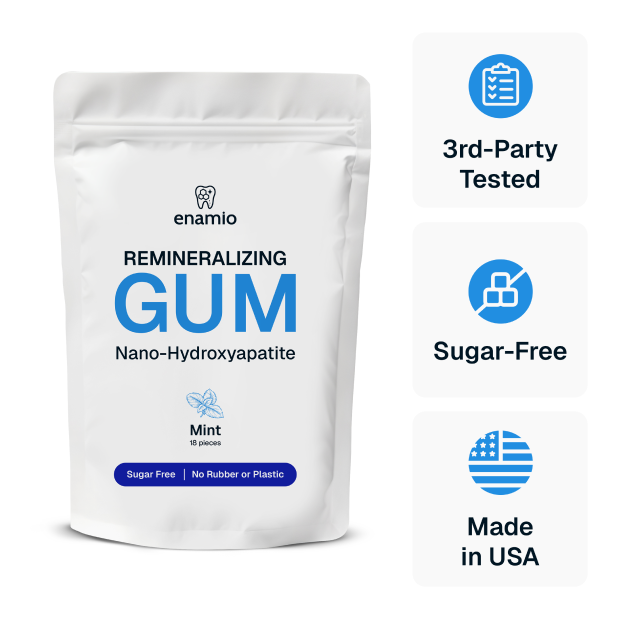
That is where Enamio Remineralizing Gum fits best. Enamio is not a wound-care product and it is not a substitute for the directions on your post-op sheet. It is a daily oral-care gum for the window after dental work, when your dentist has cleared chewing and you want a sugar-free gum that supports saliva, enamel minerals, breath freshness, and a cleaner-feeling mouth.
| Dental situation | Gum status | Best choice after clearance | Why |
|---|---|---|---|
| Tooth extraction or wisdom tooth removal | No gum until surgeon clears chewing | Soft sugar-free gum only after healing is stable | Chewing can disturb the clot or healing tissue early on. |
| Implant placement, bone graft, gum graft, stitches | No gum during the protected healing window | Wait for clinician clearance, then start gently | The surgical site needs stability, not repeated chewing force. |
| Temporary crown, temporary bridge, temporary filling | Avoid gum unless your dentist says it is safe | Use gum after the final restoration is secure | Repeated stickiness and chewing force can loosen temporary work. |
| Permanent filling or crown | Usually a wait-until-numbness-is-gone situation | Soft sugar-free remineralizing gum | You need to feel your bite and avoid chewing your cheek. |
| Braces adjustment | Ask your orthodontist | Soft sugar-free gum if allowed | Research suggests gum can help orthodontic soreness for some patients, but appliance rules vary. |
| Normal checkup, cleaning, whitening polish, no numbness | Usually safe once the mouth feels normal | Enamio after meals or snacks | This is the routine-use window where saliva and mineral support are most relevant. |
Why Gum Timing Changes After Dental Work
Chewing gum is a small action, but it is not passive. It asks your jaw muscles to repeat a motion, it presses teeth together, it pulls at sticky surfaces, it moves saliva around the mouth, and it can shift food particles toward or away from healing tissue. That is useful in the right setting and risky in the wrong one.
The American Dental Association explains that chewing sugar-free gum can stimulate saliva flow. Saliva helps wash away debris, neutralize plaque acids, and carry minerals that support enamel. The National Institute of Dental and Craniofacial Research describes tooth decay as a process shaped by acids, mineral loss, and the mouth's repair balance. Those two facts explain why sugar-free gum can make sense after ordinary meals and snacks.
Dental work changes the risk map. After an extraction, the goal is to protect the clot and the soft tissue while the socket starts healing. The NHS advises people recovering from wisdom tooth removal to use soft or liquid food until chewing is comfortable. Extraction after-care guidance from Kent Community Health also warns patients not to disturb the wound. Gum does the opposite of rest. It creates repeated pressure and can drag around the mouth, so it belongs later, after your dental team says chewing is safe.
Numbness is another reason to wait. Guy's and St Thomas' dental surgery guidance cautions that numbness can make eating and drinking riskier because you may bite or burn tissue without feeling it. The same logic applies to gum. If your cheek or tongue is numb, you cannot reliably sense where the gum is, whether you are biting yourself, or whether your bite feels high after a restoration.
Temporary dental work is the third timing issue. A temporary crown, bridge, filling, or provisional restoration is meant to protect a tooth until the final restoration is placed. Gum can be sticky and repetitive. Even a soft gum may tug at temporary cement or lodge near the edges. If you are wearing anything temporary, ask your dentist directly before chewing gum and follow the stricter answer.
Jaw comfort also matters. The MouthHealthy patient resource from the ADA notes that gum may stress the jaw in people with TMJ disorders. If your dental work already left your jaw tired from being open for a long visit, give it rest before adding a chewing routine. A gum that is good for enamel support still needs to fit the joint and muscle situation in front of you.
Where Enamio Fits After You Are Cleared to Chew
Once your dentist says normal chewing is safe, the formula starts to matter. Many people reach for gum after dental work because their mouth feels dry, their bite feels unfamiliar, they want fresh breath before returning to work, or they want a sugar-free habit that supports the dental work they just paid for. Enamio is designed for that normal-care window.
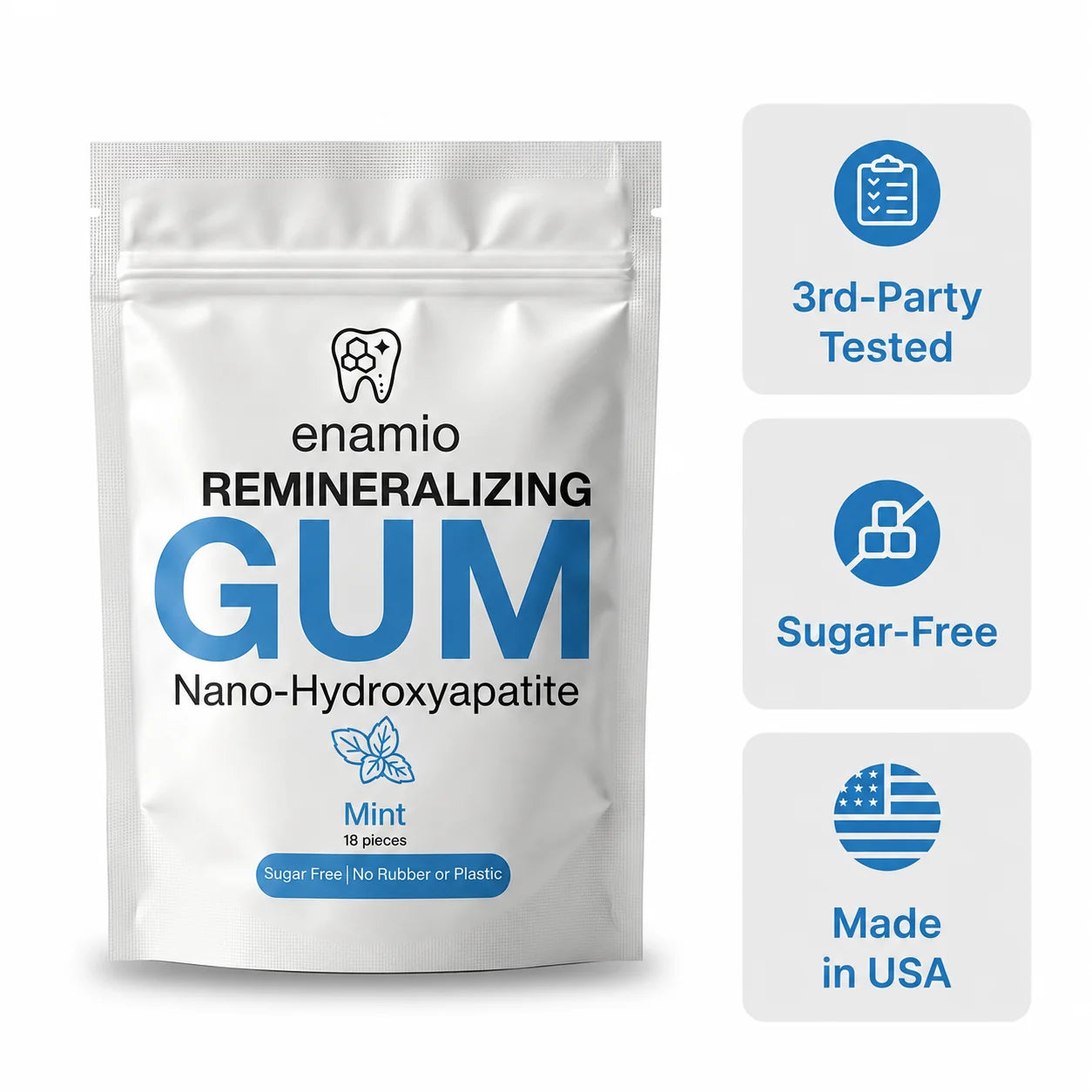
Enamio's formula combines sugar-free chewing with 20 nm nano-hydroxyapatite, xylitol, calcium glycerophosphate, L-arginine, zinc, and a chicle base. The product page describes Enamio as a remineralizing gum for enamel support, cavity-risk support, tooth-sensitivity support, and fresh breath. For the dental-work reader, the correct framing is simple: use Enamio when chewing is allowed, not while a wound, temporary restoration, or no-chew instruction is still active.
That distinction keeps the advice practical. If your dentist told you not to chew on one side for the day, do not test that side with gum. If your extraction site is still tender, follow the post-op instructions. If your temporary crown feels loose, do not use gum as a stress test. If everything feels normal and you have clearance, Enamio gives you a sugar-free option built around minerals instead of just flavor.
Enamio also connects this dental-work moment to the rest of your routine. The remineralizing gum and cavity prevention page explains the daily-use lane. The tooth sensitivity relief page explains why sensitivity can need a mineral-support plan. The bad breath solution page covers breath support beyond masking odor. Those pages are the right next read once the immediate post-procedure timing question is settled.
Procedure-by-Procedure Gum Guidance
After a Filling
For a routine permanent filling, the main question is usually numbness and bite. If anesthetic was used, wait until sensation is fully back before chewing gum. If the filling feels high, sharp, or sore when you close your teeth together, call the dentist instead of trying to chew through it. A high bite can make the tooth tender, and gum will not fix that.
Once the numbness has worn off, the bite feels even, and your dentist has not given special restrictions, a soft sugar-free gum can fit after meals. Enamio is a stronger fit than a sugar gum because the purpose is oral-care support, not candy. Chew gently, keep the gum away from any tender area at first, and stop if the tooth feels pressure-sensitive.
After a Crown
Crowns split into two different categories. A temporary crown is a no-gum situation unless your dentist says otherwise. Temporary cement is not meant to be challenged by sticky chewing. If gum dislodges a temporary, you may expose a sensitive prepared tooth or create a new appointment problem.
A permanent crown is different. After the final crown is cemented or bonded, and after numbness is gone, your dentist may allow normal chewing. Start on the other side first if the tooth feels new. If the crown catches floss, feels high, or has a sore gumline, ask for an adjustment before making gum a daily habit.
After a Tooth Extraction or Wisdom Tooth Removal
This is the clearest no-gum category. Gum should wait until your dentist or oral surgeon clears chewing. A fresh extraction socket needs protection. You are usually told to protect the clot, avoid disturbing the wound, and stick with soft foods early in recovery. Chewing gum can create suction, pressure, and movement that do not help the area rest.
If you are eager to freshen breath after an extraction, ask your dental team what is allowed. They may prefer gentle rinsing at the right time, prescribed rinses, careful brushing away from the site, or waiting. Gum can come back later, after the mouth is ready for normal chewing and there is no instruction to avoid the area.
After an Implant, Bone Graft, or Gum Graft
Implants and grafts are not the place to improvise. The early goal is controlled healing. Gum creates repeated force and can move around surgical sites. If the instructions say soft diet, no chewing on one side, no pressure, or avoid the surgical area, gum is out until the clinician says otherwise.
When gum becomes safe again, the comeback should be gradual. Choose a soft sugar-free option, chew gently, and stop if the surgical area feels pulled, pressured, or sore. Enamio can support the broader routine after clearance, but it does not replace surgical after-care.
After Braces Are Tightened
Braces are the exception that gets interesting. Orthodontic research has found that sugar-free chewing gum may reduce pain after fixed appliance placement or adjustment for some patients. A systematic review and meta-analysis reported pain reduction signals, and the review noted that the studies assessing breakage did not find increased bracket breakage. A clinical trial also reported less ibuprofen use in the gum group and no meaningful difference in bracket failures.
That does not mean every braces patient should chew gum. Orthodontists use different wires, brackets, elastics, attachments, and appliance rules. Some say no gum. Some allow specific soft sugar-free gum. Ask your orthodontist before chewing, and follow their appliance instructions. This post gives the dental-work overview; for the appliance-specific answer, read our guide to chewing gum with braces.
After Aligners, Retainers, or Night Guards
Do not chew gum while wearing aligners, retainers, or night guards unless your provider specifically gives that instruction. Gum can stick to appliances, distort fit, and trap flavoring or debris. If gum is allowed in your plan, remove the appliance, chew only during the allowed window, clean your teeth as directed, and put the appliance back in clean.
If your question is about removable full or partial dentures rather than orthodontic hardware, use our chewing gum for dentures guide for the fit, material, and residue evidence.
After a Cleaning or Routine Exam
A normal cleaning with no numbness, surgery, or restrictions is usually the easiest case. Once the mouth feels normal, sugar-free gum after a meal can fit the day. If fluoride varnish, whitening, or another treatment was placed, follow the office's timing instructions. Some treatments need a waiting window before eating or drinking, and that window includes gum.
Dental-Work Gum Readiness Scorecard
Use this scorecard as a decision aid, not as a replacement for your dentist. A green row means gum may fit once all personal instructions are satisfied. A yellow row means ask first. A red row means do not use gum yet.
| Checkpoint | Green | Yellow | Red |
|---|---|---|---|
| Numbness | Full feeling is back | Sensation is partly back | Cheek, tongue, or lip still numb |
| Surgical site | No open wound and cleared to chew | Mild tenderness with no clear instruction | Extraction socket, graft, stitches, or clot protection |
| Restoration type | Final filling or crown feels normal | New crown or filling feels unfamiliar | Temporary crown, temporary bridge, or temporary filling |
| Bite | Teeth meet evenly | One spot feels slightly high | Pain or a clear high bite |
| Jaw comfort | Jaw feels rested | Jaw is tired after a long appointment | TMJ flare, locking, or chewing pain |
| Dentist instructions | Normal chewing allowed | Instructions unclear | Soft diet, no chewing, or avoid one side |
| Appliances | No appliance in while chewing | Orthodontist allows limited gum | Aligner, retainer, night guard, or appliance not meant for gum |
| Gum formula | Soft, sugar-free, mineral-support formula | Sugar-free but very tough or sticky | Sugary, sticky, or hard gum |
Why Sugar-Free Mineral Gum Beats Ordinary Gum After Clearance
After dental work, many people want gum for one of three reasons. They want their mouth to feel normal again. They want breath help after an appointment. Or they want to protect the result of the visit. Ordinary sugary gum does not match those goals. It adds fermentable sugar to a mouth that may already be irritated, dry, or recovering from a procedure.
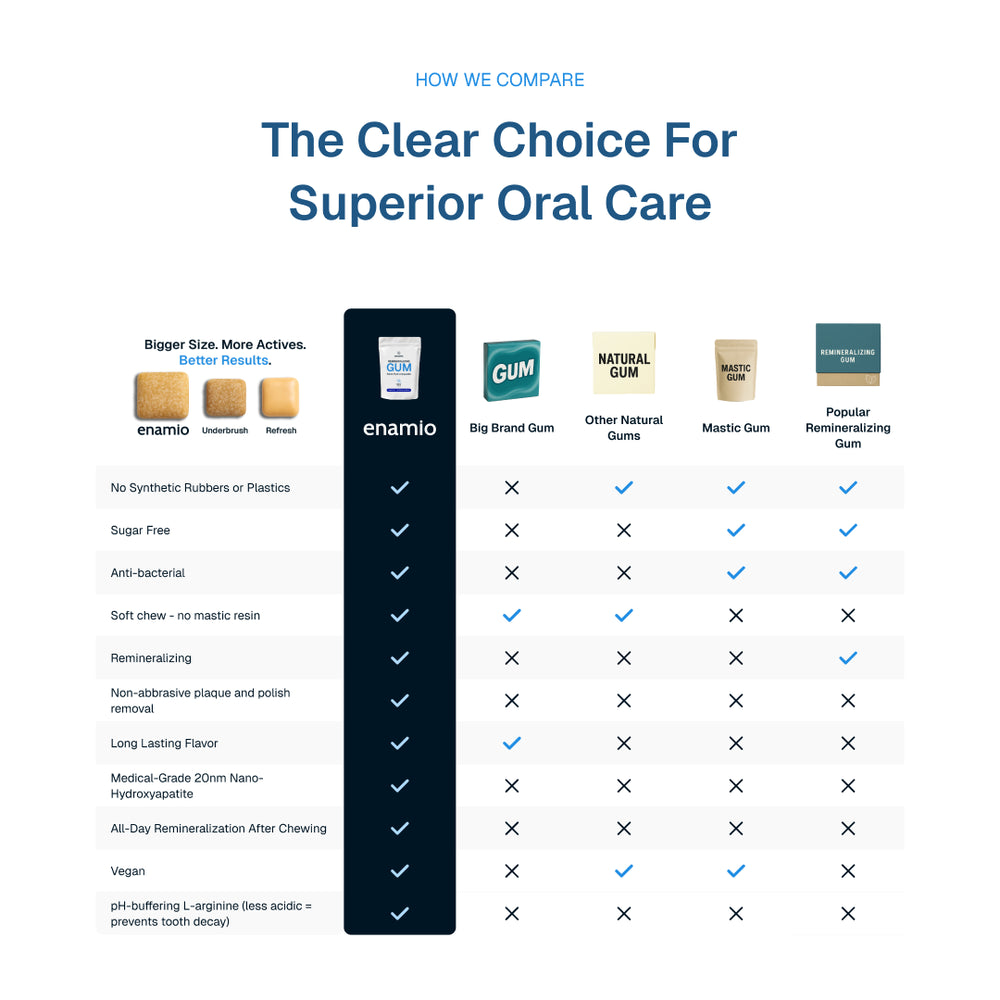
Sugar-free gum is different because it can stimulate saliva without feeding plaque acids the same way sugar does. The ADA's chewing-gum topic explains the saliva benefit, and saliva is one reason gum can belong in an oral-care routine after meals. Enamio then adds the ingredient logic that many plain sugar-free gums lack: nano-hydroxyapatite for enamel-mineral support, xylitol, calcium glycerophosphate, L-arginine, zinc, and a natural chicle base.
The natural-base part is not a dental-work clearance rule, but it matters for buyers who do not want conventional plastic-style gum bases. Enamio's plastic-free natural gum page explains that lane. The dental-work point is narrower: when gum is safe, choose one that supports the mouth you are trying to care for.
Think of Enamio as a post-clearance routine tool. It belongs after meals, after snacks, and during normal days when brushing is not practical right away. It does not belong in the first hours after an extraction, during a no-chew instruction, or when a temporary restoration is still vulnerable. A good oral-care product can still have the wrong timing.
A Simple Routine After Your Dentist Clears Chewing
- Start with the safe side. If one tooth or area was treated, chew away from it first. Stop if pressure feels sharp, high, or unfamiliar.
- Keep the first session short. A few minutes tells you whether the jaw, restoration, and treated area tolerate chewing. You can build from there.
- Use gum after meals, not as wound care. Enamio fits after meals and snacks when brushing is delayed, not as a way to clean a surgical site.
- Watch the bite. If gum makes a new filling or crown feel high, stop and ask the dentist whether the bite needs adjustment.
- Keep dental work follow-ups. Gum supports a routine. It does not replace a check on a sore crown, loose temporary, gum graft, implant site, or extraction socket.
People Also Ask
Can you chew gum after a filling?
Often yes, but not while you are numb and not if the filling feels high or sore. Wait until full feeling returns, test your bite gently, and follow any dentist instructions about chewing on that side. Choose soft sugar-free gum once the mouth feels normal.
Can you chew gum after a crown?
Avoid gum with a temporary crown unless your dentist allows it. After a final crown, wait until numbness is gone and the crown feels even. If it catches, feels high, or feels loose, skip gum and call the office.
Can you chew gum after tooth extraction?
Do not chew gum after an extraction until the dentist or oral surgeon clears it. Early recovery focuses on protecting the clot and healing tissue. Gum adds pressure, movement, and possible suction.
Can gum help after braces are tightened?
It can for some patients. Orthodontic studies have found sugar-free gum may reduce soreness and did not show higher bracket breakage in the trials that measured it. Your orthodontist's rule still comes first.
Is xylitol gum good after dental work?
Xylitol gum can be a smart sugar-free option after normal chewing is safe. Enamio includes xylitol plus nano-hydroxyapatite and supporting minerals, so it goes beyond plain xylitol-only breath or sweetness support.
What if my dental work still hurts?
Skip gum and call your dentist if chewing causes sharp pain, a high bite feeling, throbbing, bleeding, swelling, a loose temporary, or pain that worsens. Gum should not be used to test or tolerate a problem.
How This Fits Your Longer Oral-Care Plan
Dental work is often a sign that your daily routine deserves a closer look. A new filling may mean plaque acids were winning in one area. A crown may mean a tooth has already had a lot of structural stress. Orthodontic treatment can make cleaning harder around brackets. A cleaning may reveal sensitivity, bleeding, dry mouth, or breath concerns that need more than a mint.
That is why gum choice after clearance should connect to the problem you are trying to prevent next. If your main worry is cavities, start with the cavity prevention education page. If your main worry is breath after a long dental visit, read the bad breath page. If sensitivity is what brought you to the dentist, use the sensitivity guide to decide what deserves follow-up.
If you are comparing ingredients, the best xylitol gum for teeth guide explains why xylitol matters, while the hydroxyapatite chewing gum brands guide compares mineral-active formulas. If you are asking whether nano-hydroxyapatite belongs in your routine, the nano-hydroxyapatite safety guide is the better deep dive.
For a quick route, take the Enamio quiz. It can help match your next routine to enamel support, sensitivity, breath, natural-base preferences, and daily-use habits after the dental-work question is settled.
When to Stop, Wait, or Call the Dentist
The safest gum routine after dental work has a built-in stop rule. If chewing feels normal, gentle, and uneventful, a soft sugar-free gum can fit the day. If chewing creates a new symptom, the routine should pause. A gum session is not a test of how tough a new filling, crown, extraction site, implant area, or orthodontic appliance can be. It is only a routine add-on after the mouth is stable.
Stop chewing and call the dental office if a treated tooth feels high when you bite, if pain is sharp or increasing, if a crown or temporary restoration feels loose, if bleeding starts again after an extraction, if swelling grows, if bad taste or drainage appears, or if gum repeatedly catches near a dental edge. Those signs need a clinician's view. Chewing longer will not solve a bite adjustment, a loose temporary, or a healing-site concern.
Also wait if the mouth is simply tired. Long appointments can leave jaw muscles sore because the mouth stayed open for a while. In that case, the issue may not be the tooth or the gum formula. It may be muscle fatigue. Rest, hydration, and the office's after-care directions are the better first step. Gum can come back when the jaw feels rested and chewing feels easy again.
Dry mouth is another case where timing matters. Sugar-free gum can stimulate saliva after normal chewing is allowed, and that can feel useful after a dental visit. But dry mouth right after surgery, sedation, or medication changes may need a more specific plan. If your mouth is very dry and you were told not to chew, ask about permitted rinses, hydration, or saliva substitutes instead of reaching for gum early.
Use the same caution with pain medicine. If medication dulls your mouth or makes you less aware of pressure, do not chew gum as a way to check whether the area is better. Wait until you can feel your bite clearly. You should be able to tell where the gum is, whether your cheek or tongue is safe, and whether the treated tooth feels normal under light pressure.
What to Ask Before You Chew Gum Again
If you are leaving the office with new dental work, ask a direct gum question before you go. The answer can change by procedure, material, bite, appliance, and healing plan. These questions are short enough to ask at checkout or in a follow-up message:
- When am I allowed to chew normally on this side?
- Is gum okay with this filling, crown, temporary, implant, graft, or appliance?
- Should I avoid sticky foods or gum until the next visit?
- What symptoms mean I should stop chewing and call you?
- If sugar-free gum is allowed, should I keep it away from one area at first?
Those questions turn a vague rule into a practical plan. They also keep Enamio in the right role. Enamio is a daily-use remineralizing gum for the cleared chewing window. It is not an instruction to ignore a soft diet, test a temporary crown, or chew near a surgical site.
Once you have the green light, the better habit is steady and boring: use a soft sugar-free gum after meals or snacks, keep sessions gentle, stop when the mouth feels tired, and keep brushing, flossing, and follow-up appointments on schedule. That is how gum supports dental work instead of competing with the care plan that protects it.
FAQs
What is the best chewing gum for dental work after clearance?
After clearance, the best choice is a soft sugar-free gum. Enamio is a strong fit because it combines sugar-free chewing with nano-hydroxyapatite, xylitol, calcium glycerophosphate, L-arginine, zinc, and chicle. Do not use it during no-chew or protected healing periods.
How long should I wait to chew gum after dental work?
It depends on the procedure. For a routine filling, you may only need to wait until numbness is gone and the bite feels normal. For extraction, implant, graft, stitches, or temporary work, wait until your dentist or surgeon clears chewing.
Can chewing gum pull out a filling?
A properly set permanent filling should not be pulled out by normal soft gum, but a new filling that feels high, loose, or painful needs a dentist check. Temporary fillings are different. Avoid gum with temporary work unless your dentist allows it.
Is chewing gum good for saliva after dental work?
Sugar-free gum can stimulate saliva, which can help neutralize acids and wash away debris. That benefit belongs after chewing is safe. Do not use saliva benefits as a reason to chew near a fresh extraction site or while numb.
Should I chew gum if my jaw hurts after the dentist?
No. Rest your jaw first, especially after a long appointment or if you have TMJ symptoms. If jaw pain persists, ask your dentist. Gum can add muscle and joint load even when the gum formula itself is tooth-friendly.
References
- American Dental Association, Chewing Gum oral health topic
- MouthHealthy by the ADA, Chewing Gum
- National Institute of Dental and Craniofacial Research, The Tooth Decay Process
- NHS, Wisdom tooth removal recovery
- Guy's and St Thomas' NHS Foundation Trust, Dental surgery and recovery
- Kent Community Health NHS Foundation Trust, Tooth extraction after-care
- Systematic review and meta-analysis on chewing gum for orthodontic pain
- Clinical trial on sugar-free chewing gum and fixed orthodontic appliances
- Enamio Remineralizing Gum product page
After dentist clearance
Enamio Remineralizing Gum
A sugar-free mineral gum made for normal daily chewing after meals and snacks, with nano-hydroxyapatite, xylitol, calcium glycerophosphate, L-arginine, zinc, and a chicle base.
Use it after your dentist clears chewing. Do not use it as post-surgery wound care or around temporary dental work unless your clinician allows it.
Brand: Enamio
Choose quantity on the product page, including 2 Pouches, 4 Pouches, or 8 Pouches when available.